Apletree/Appletree Family History
Rob Forsyth
The origins of the family and its name is probably from the village of Appletree in Northamptonshire. Exactly when the first of the family came to Deddington is not known but three of them appear as tax payers on the 1525 Subsidy Roll - Richard, John and Thomas.
Family History
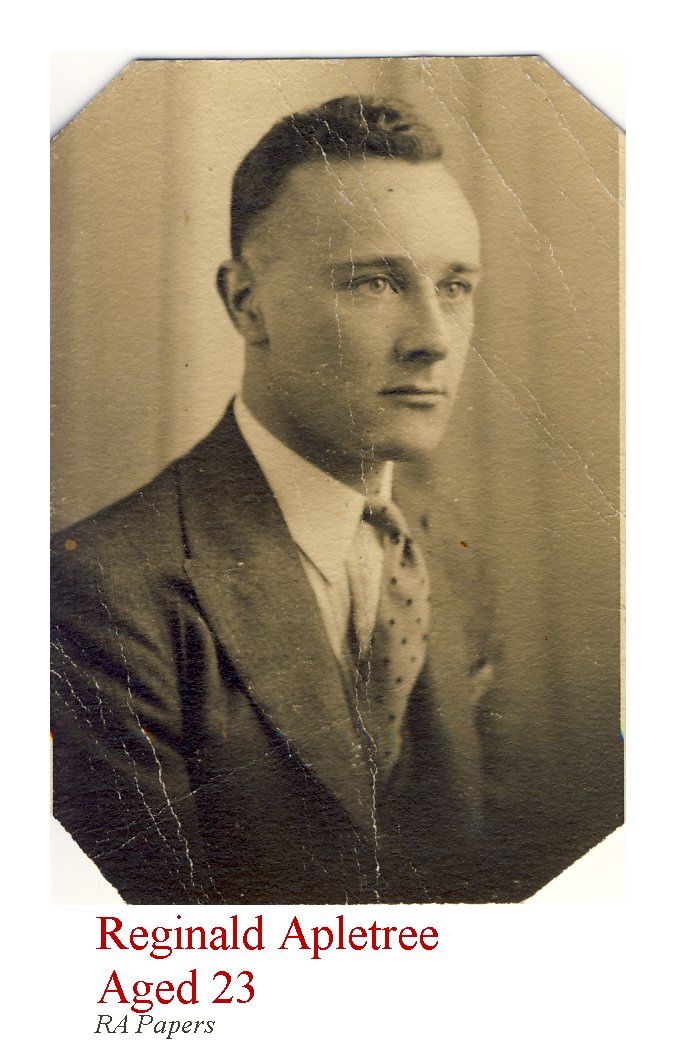
Reginald Apletree (1914-97) carried out extensive research into the family's history which had a significant presence in Deddington through the 16th, 17th & 18th centuries. He wrote a very extensive and detailed book tracing the numerous branches from the 12th Century to the present day. I received the book from Alison Day as one of several items from her late husband Chris’ collection which she has donated to the Parish Archive. Chris had received it under cover of a letter from Ann Heymans, Reginald’s niece, with whom I am now in regular contact. It is published here (for the first time publicly) by kind permission of the Apletree family. Ann has been of great help to me with the contents of this article and with providing items from Reginald's vast research library.
click on images to enlarge
The Book
The layout of the book is based on 14 family trees with the relevant tree at the start of each chapter. The text sometimes refers to other trees so, for convenience, there is also a link to 'all charts' which can be opened in parallel.
In order to make the book more accessible to Deddington readers, any references to Deddington, Clifton or Hempton have been highlighted in yellow in the text and the chapter headings in which they occur have a (D), (C) or (H) annotation in the index below. One can also refer to the The Family Tree which is publicly available on the Ancestry genealogical website. NB: a subscription may be required to access it
The text is word searchable using Ctrl+F browsing on Windows or 'Find on Page' on devices.
All Charts Index and Introduction Chapter 1 (D) Chapter 2 (D) Chapter 3 (D, C, H) Chapter 4 (D, H) Chapter 5 (D, C, H) Chapter 6 (D, C) Chapter 7 (D) Chapter 8 (D, C) Chapter 9 (D) Chapter 10 (D) Chapter 11 Chapter 12 Chapter 13 Chapter 14
Some interesting characters
While I have selected a few characters to expand on, Chapters 1-10 contain lots of interesting facts about the family. The very short lived naval career of John is one: He joined H.M.S. Drake as an Able Seaman on 1st January 1743. On 1st May 1744 he was "discharged dead", his ship having been blown up by a Spanish man-of-war. His net wages of £3.3.5d. were paid to his father John on 4th January 1747. The Government seemingly was just as slow in paying its dues then as it is now!
Thomas (dates unknown) How six feet nearly changed the course of history in 1579 and could have cost Thomas his life
Thomas (1606-66) was deeply involved in the Civil War. The King stayed with him in The Parsonage (now Castle House) and he also worked with the Parliamentarians. It is debatable which side he was actually on - or was he a spy and for which side?
Nathaniel ( 1672-1730) Became involved in a disputed inheritance case at Chancery and had to sell lands
Nathaniel (1706-1773) Sees a change in the fortunes of his family and the end of their presence in Deddington
Properties
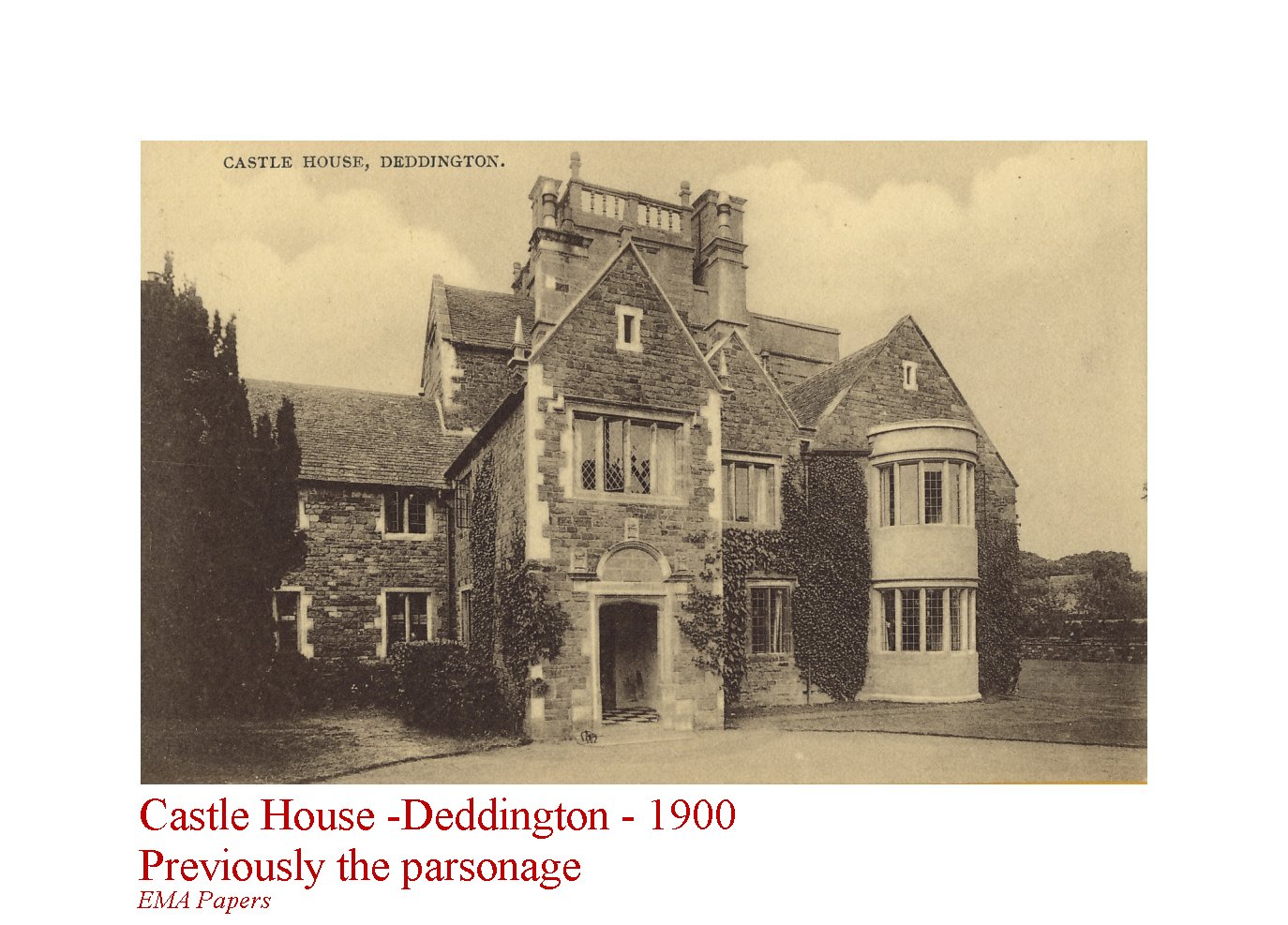
The Parsonage (Castle House) was extensively remodelled by Thomas in 1654 where he lived until his death in 1666. His initials remain visible on the historic rainwater heads of this Grade II* listed building.
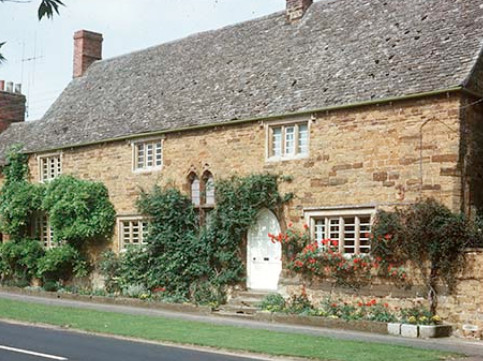 Leaden Porch House: was leased from the Windsor Manor in 1661 by Thomas Appletree and his son. Hearth Tax records from 1665 indicate that William and John Appletree lived here. It was the farmhouse for Leaden Porch farm until the 1808 Inclosures
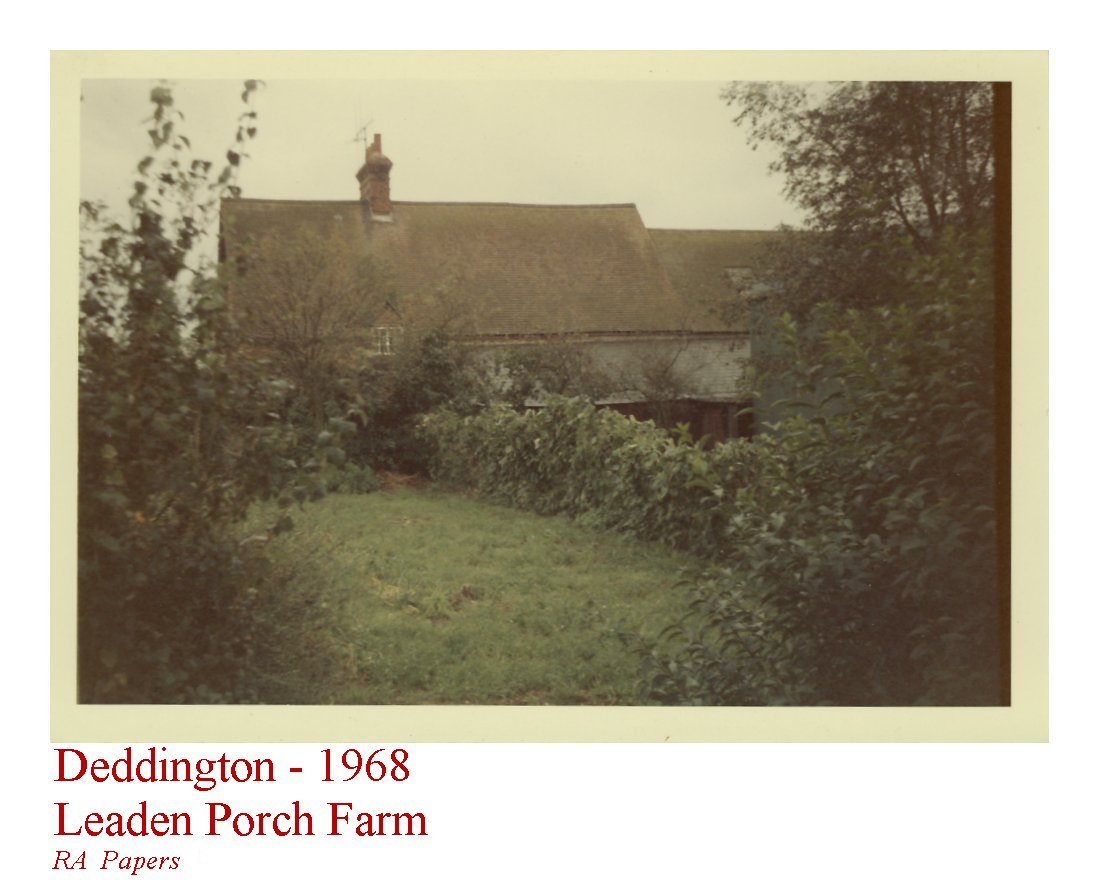 Leaden Porch Farm:In 1665 Thomas became the prominent lessee of the entire Windsor manor. Because the historic Leaden Porch estate fell under this manorial jurisdiction, Thomas served as its landlord. Following the 1808 Inclosures a new farmhouse was constructed at the foot of Chapman's Lane
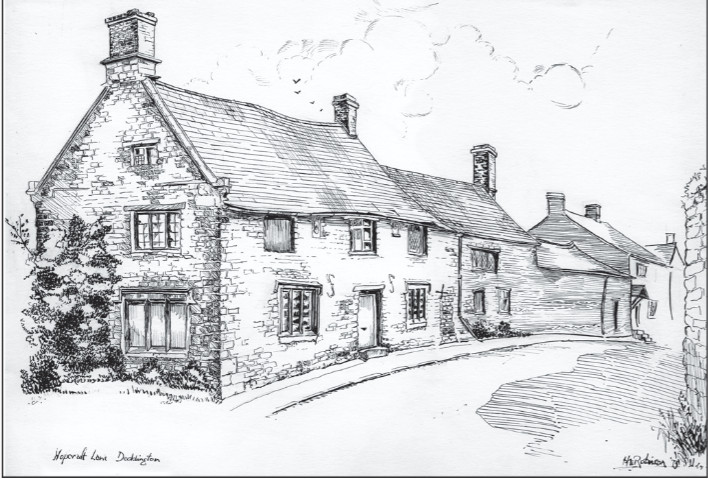
Appletree Farm: The farmhouse later became the school and still stands on Hopcraft Lane (formerly School Lane)
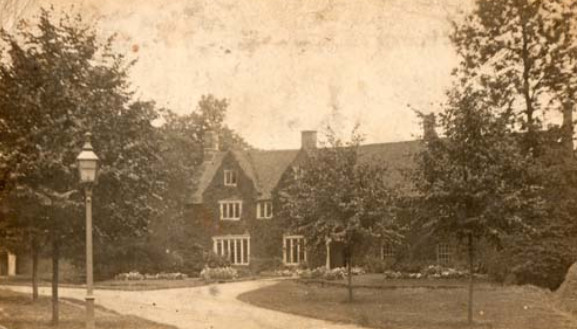
Blount’s Farm (subsequently Poplars then Castle End):The family maintained a Christ Church College lease on this farm spanning from 1710 until the late 19th century
Graves
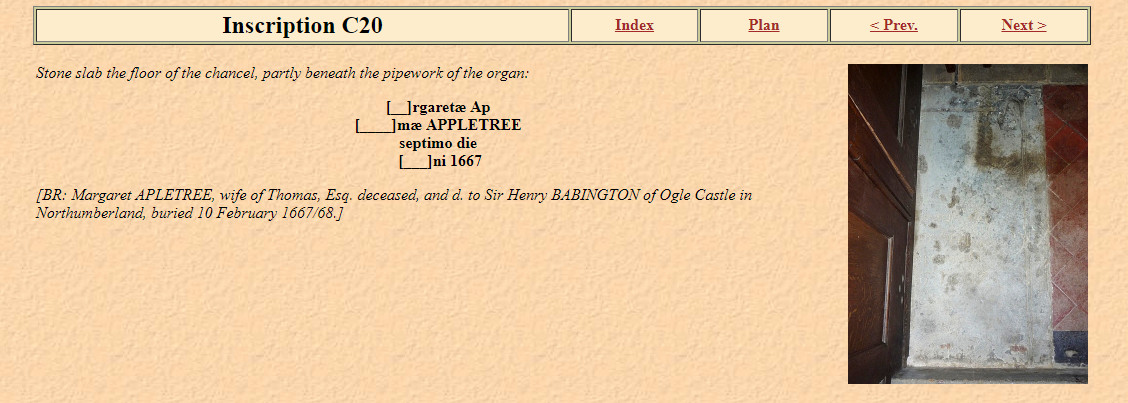
There are sixteen graves in the church and churchyard, the earliest being that of Margaret née Babington, who died in 1667. She was the wife of Thomas (1606-66).